LLM cost allocation should be productized: charge each feature for tokens, embeddings, vector ops, and infra rather than burying spend on a central platform. That's the single change that converts an opaque $200k+ annual inference bill into product decisions with measurable ROI.
A fully loaded senior ML engineer in the U.S. costs roughly $220,000 per year. A 5-engineer AI feature team therefore represents about $1.1M/year. A separate $200k–$500k/year inference and vector-store bill is not 'ops' — it is product cost and should be priced back to product owners or customers.
Direct answer: Use a hybrid showback + chargeback model that attributes costs to features by (1) tagging tokens and vector queries at the call-site, (2) applying per-1M-token and per-vector-query rates, and (3) amortizing fixed infra (model licensing, GPU nodes, storage) monthly. In practice, this converts a $300k/year inference bill into per-feature line items often ranging $1k–$50k/month, letting you deprioritize or monetize the highest-cost features.
LLM cost allocation is a bookkeeping and engineering pattern that maps resource usage (tokens, embedding calls, vector queries, GPU-hours, egress, and storage) to product features and customers.
llm cost allocation patterns
You have four levers to allocate LLM-related costs: metered variable costs (tokens, embeddings, vector lookups), fixed compute (GPU nodes or model licenses), platform overhead (orchestration, queues, monitoring), and data storage/egress. Metered variable costs should be the basis for showback; fixed compute must be amortized across features using a sensible horizon (12–36 months).
A mid-market production app with 100k monthly users often consumes 50M–500M tokens/month. At provider prices of $6–$12 per 1M prompt+completion tokens for large-chat models, a 100M-token month is $600–$1,200/month; at 500M tokens the bill is $3,000–$6,000/month. Embeddings are cheaper but add up: 1M embedding requests at $0.50–$2.00 per 1M embeddings costs $0.50–$2,000 depending on vendor and vector dimensionality.
Vector databases and search add predictable costs. A production vector index that serves 1–5M queries/month often costs $2,000–$20,000/month across providers (hosted vector DB, storage, and CPU for ANN). S3 storage for embeddings and reindexed documents is often below $100/month for most products, but egress for large documents or high-throughput retrieval can add $500–$2,000/month on AWS at $0.09/GB egress.
The alternative of absorbing the bill centrally creates perverse incentives: product teams optimize feature quality without regard to cost and finance has no lever to enforce limits. When a single feature drives 40% of tokens but only 10% of user value, that asymmetry costs you both dollars and attention.
How to attribute costs reliably
Tag tokens and vector calls at the call-site. Hardware-level logs are noisy; instrument every client call with a feature_id and customer_id so your billing pipeline can sum token usage per feature. A single line of metadata (feature_id) added to your request tracer lets you generate showback invoices with 90–95% attribution coverage in most stacks.
Use sampling to account for cached and batched calls. If you batch 70% of embedding writes or you cache retrievals 60% of the time, tag hits and misses separately so that downstream token counts aren't double-counted. A 20% cache hit rate on completions reduces token spend roughly in proportion; caching should be considered a cost-savings multiplier.
Amortize fixed infra deterministically. If you run three A100-equivalent GPUs at $10,000/month total to serve a private model, attribute that $120,000/year across features by either active-usage share (GPU-hours per feature) or by revenue/usage buckets. For teams under $250k/month in inference spend, rolling fixed infra into showback is usually simpler than trying to hide it in platform ops.
Map UX latency budgets to cost buckets. If product requires <300ms median latency, you will likely need warm replicas and higher cost-per-inference; relaxing to 700–1,000ms allows batching and spot instances that cut per-call spend by 30–60%.
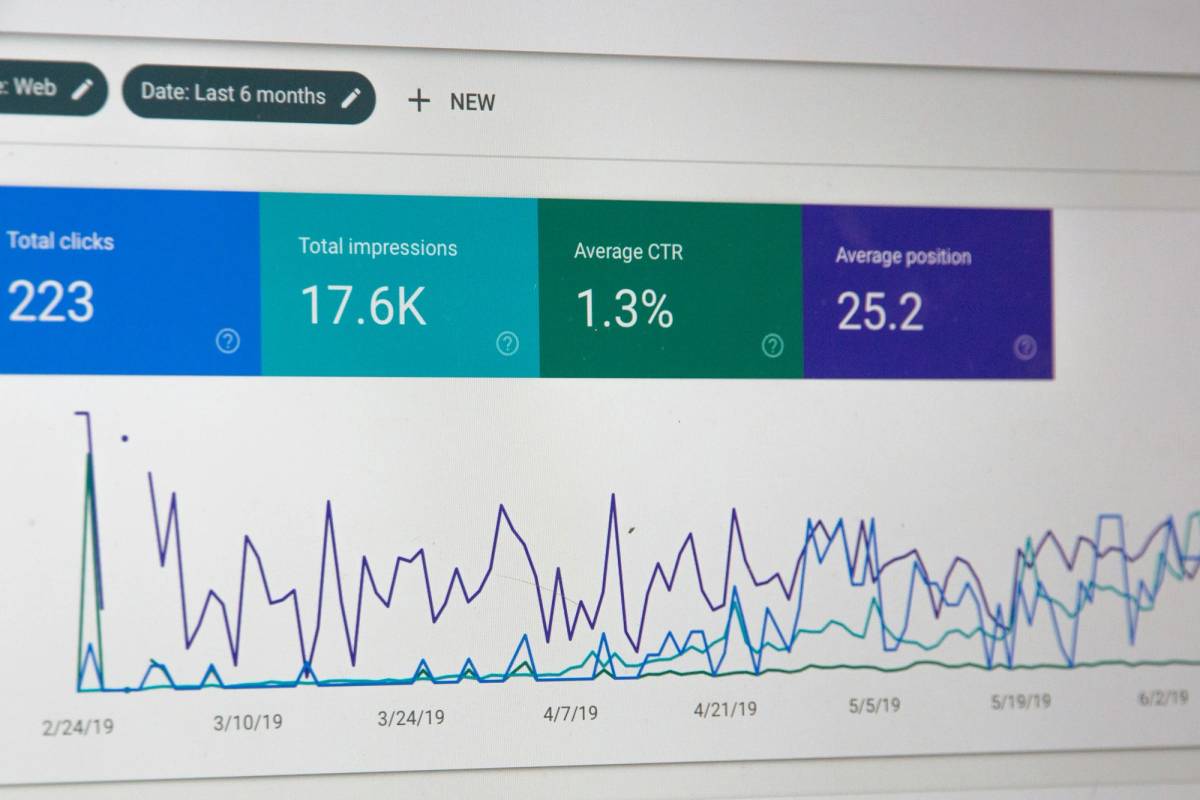
Charge features for tokens, embeddings, and vector ops; when product owners see line-item costs, they either monetize or kill expensive features faster than finance ever could.
What this means for a CTO
You must treat LLM spend like a product-managed utility. Stop treating inference and vector-store bills as platform slack. Assign visibility, set budgets, and require feature owners to include projected monthly token counts in PRDs and quarterly forecasts.
If a single feature consumes more than 25% of token volume, require an optimization plan. Optimization can look like prompt compression (30–50% token reduction), caching generative results, moving some queries to smaller models (cost delta of 3–10× between small and large models), or gating the feature behind paid tiers.
You should implement three engineering controls in the next 60 days: token and vector tagging at call-sites, a daily showback dashboard that surfaces per-feature spend, and hard rate-limits or quotas for non-production environments. Those three controls convert expensive surprises into predictable line items.
Key takeaways
1) Charge features for metered usage (tokens, embeddings, vector queries) and amortize fixed infra over 12–36 months. 2) Tagging at the call-site yields 90–95% attribution coverage for showback. 3) Optimize high-cost features before scaling model capacity; a 30% token reduction typically cuts bills proportionally. 4) Set budgets and hard quotas for experiments to avoid runaway spend.
Implementing chargeback often produces a short-term spike in platform ops as teams add tagging and tracing, but within one quarter you gain actionable data: you will know which features cost $10k/month vs $1k/month, and you will stop subsidizing low-value, high-cost experiments.